
20 MAY 2026
What would it take to build an international court capable of confronting grand corruption?
This 15th Colloquium brought tpgther leading legal, governance, and anti-corruption experts to explore the proposed International Anti-Corruption Court, with a focus on criminal enforcement, asset recovery,
and the institutional design challenges that could determine its future.
why this colloquium matters
Grand corruption does not stop at borders. It weakens institutions, distorts public power, and deprives societies of resources meant for development, justice, and public trust. This colloquium examines the proposed International Anti-Corruption Court as a possible response, and asks whether such a court can be designed to work in practice.


Carolynn Chalmers

Prof. Mervyn King
video summary
Audio summary

Alan Johnson
Alan Johnson is Chair of the Good Governance Academy and the immediate past President of IFAC. His international career spans audit, finance, governance, and board leadership, including senior roles at Unilever and other major institutions.
Key questions answered
This Colloquium represents a seminal moment in the global campaign to close the “enforcement gap” that currently shields grand corruption. As national judicial systems increasingly falter under the weight of state capture, the proposed International Anti-Corruption Court (IACC) has emerged as a strategic necessity. The discourse was anchored by a panel of preeminent legal and governance authorities. Their synthesis provides the following roadmap for a more accountable global governance framework.
Current international mechanisms are fundamentally insufficient to dismantle “grand corruption”—the systemic looting of public funds by the very officials entrusted with their stewardship. National systems are often neutralized by political interference, creating a vacuum where kleptocrats operate with near-total impunity.
Judge Richard Goldstone and Professor Mervyn King argue that this is no longer merely a financial crime; it is a profound violation of fundamental human rights. Quoting former UN High Commissioner for Human Rights Navi Pillay, Judge Goldstone emphasized that “corruption kills.” This is evidenced by the fact that the funds hemorrhaged to corruption annually could feed the world’s hungry 80 times over.
Beyond mortality, kleptocracy serves as a primary engine for global instability:
- Climate Sabotage: Corruption is a major impediment to environmental remediation. The illicit forestry trade, valued at over $100 billion annually, thrives on corrupt protections, while climate-related development aid is systematically misappropriated by officials in states perceived as the most corrupt.
- The Refugee Crisis: Forced migration is frequently the direct result of “failed states” hollowed out by kleptocratic looting. In nations like Syria, Venezuela, and South Sudan, populations flee the economic collapse and instability caused by the theft of public resources.
- Systemic Evasion: As illustrated by the Saddam Hussein Oil-for-Food scandal—where over 2,000 companies paid bribes—and the Isabel Dos Santos case, illicit flows move seamlessly across borders, easily evading localized law enforcement.
This systemic failure necessitates a transnational judicial response, moving the discourse from aspirational reform to the structured divisions of the proposed IACC.
The strategic imperative of the IACC is to breathe life into the United Nations Convention Against Corruption (UNCAC). While UNCAC has achieved near-universal reach with 192 members as of September 2025, it remains a treaty without a central enforcement mechanism.
Judge Maria Wilson identifies the Criminal Division’s mandate as the prosecution of “core crimes,” including the bribery of national and foreign officials, embezzlement, and illicit enrichment. Critically, the IACC represents a massive legal evolution: it is the first international criminal treaty to recognize legal persons. This allows the court to penetrate the shell company structures and professional networks—lawyers, bankers, and real estate agents—that facilitate grand corruption.
Jurisdictional Architecture of the Criminal Division
Target Entity | Jurisdictional Trigger | Strategic Implication |
|---|---|---|
Natural Persons | Nationality or habitual residence in a member state. | Eliminates safe havens for individual kleptocrats regardless of where they hide. |
Legal Persons | Registered or conducting business within a member state. | Innovation: Dismantles the corporate and shell structures used for laundering. |
Territoriality | Crimes committed in whole or in part within a member state. | Grants the court power to intervene in “State Capture” scenarios. |
Vessels/Aircraft | Crimes occurring on assets registered to a member state. | Prevents the use of mobile assets as jurisdictional “dead zones.” |
This division ensures that individual and corporate enablers of corruption face a credible threat of prosecution, transitioning the focus from punishment to the restoration of wealth.
The Assets Division is the IACC’s most innovative strategic pillar, acting as a standalone mechanism to return stolen wealth to victimized populations. Professor Allan Rock critiques the current “patchwork” system (such as the World Bank’s StAR Initiative) as being hindered by informal, non-binding agreements and unpredictable negotiations.
The Assets Division provides a binding, impartial forum to resolve contested claims of ownership. Strategically, this division serves as a “backdoor to justice”: by utilizing a lower “balance of probabilities” standard of proof, the court can seize and repatriate assets even in cases where a criminal conviction is blocked by political interference or a high evidentiary bar.
The Strategic Logic of Asset Recovery:
- Civil Forfeiture Efficiency: Allows for non-conviction-based forfeiture, bypassing the protracted timelines of criminal trials.
- Ad Hoc Accessibility: The division is open to any state—including non-member states—willing to submit to the court’s jurisdiction for a specific dispute.
- Third-Party Adjudication: Impartially resolves competing claims from interveners, ensuring funds are returned through equitable, transparent channels.
- Sovereignty Restoration: By facilitating the return of stolen billions, the court restores the financial capacity of victimized states to meet the needs of their citizens.
To secure global consensus, the IACC is built upon the Principle of Complementarity, functioning as a “Court of Last Resort.” Judge Wilson and Judge Goldstone clarify that the IACC does not supplant domestic authority; it intervenes only when national authorities are proven unwilling or unable to prosecute.
Strategically, the IACC acts as a capacity-builder for willing states. For example, nations like Moldova have endorsed the court because it offers expert assistance—investigators, prosecutors, and judges—to domestic authorities who may want to prosecute but lack the financial or technical resources.
Mechanisms Protecting National Interests and Accountability:
- No Gravity Threshold: The court recognizes that corruption’s impact isn’t always measured by dollar amount; it intervenes based on the integrity of the process, not just the size of the loot.
- Irrelevance of Official Capacity: The statute ensures that head of state immunity is not recognized. No leader can use their office as a shield against core crimes.
- Vulnerability of Assets: Even if a kleptocrat remains protected at home, their offshore assets enjoy no such immunity, making the IACC more potent than previous international models.
The success of the IACC depends on neutralizing deep-seated institutional roadblocks. Analysis from Desi Gotskova, Lorraine Ocampos, and Dr. Reuel Khoza reveals a dangerous correlation between “state capture” and the “hollowing out of democracy.” Gotskova highlights that even in regions with robust legal frameworks, systematic impunity persists because of weak institutional resilience.
These barriers are compounded by the “normalization of petty corruption,” which Ocampos identifies as the foundational hurdle. When bribery becomes an everyday necessity, it provides the social cover for grand corruption to thrive. Furthermore, the lack of whistleblower protection remains a lethal barrier; Dr. Khoza noted that those who speak up face genuine threats of assassination, creating a total deterrent to accountability.
Corruption is not merely theft; it is collusion and the betrayal of trust. True reform requires leadership to move beyond mere compliance and embed integrity into the very core of business and governance models. We must champion uncompromising transparency in procurement, foster civic literacy to end the tolerance of bribery, and provide institutional teeth to ensure that investigative reports result in immediate consequence management rather than gathering dust. — Dr. Reuel Khoza
The 15th Colloquium concludes that the IACC is the necessary evolution in our global governance architecture. It transforms the discourse of anti-corruption from a series of high-minded principles into a roadmap for tangible, enforceable justice.

Judge Richard Goldstone
Judge Richard Goldstone is a former Justice of the Constitutional Court of South Africa and former Chief Prosecutor of the UN tribunals for the former Yugoslavia and Rwanda. He also chaired the first treaty drafting committee for the proposed International Anti-Corruption Court.
Justice Maria Therese Martina Wilson
Justice Maria Wilson is a Court of Appeal judge in Trinidad and Tobago whose career spans domestic and international criminal justice, including work at the ICC, ICTR, and the United Nations. She is also involved in ongoing efforts to advance the proposed IACC

Allan Rock
Allan Rock is President Emeritus of the University of Ottawa and a former Canadian Minister of Justice, Health, and Industry. He serves on the Board of Integrity Initiatives International and chairs the group preparing a treaty for the proposed International Anti-Corruption Court.
Desislava Gotskova
Desislava Gotskova is a lawyer and senior anti-corruption expert with more than 20 years of international experience. Her work focuses on institutional integrity, asset tracing, confiscation, and the practical implementation of anti-corruption standards.

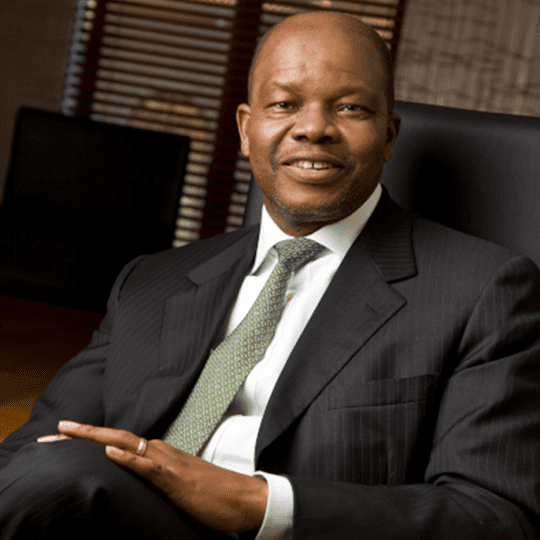
dr reuel khoza
Dr Reuel Khoza is a distinguished businessman, governance thought leader, and President of the Institute of Directors in South Africa. With more than 45 years of executive leadership experience, he has played a significant role in shaping South African corporate governance, including through the development of King II, III, and IV.
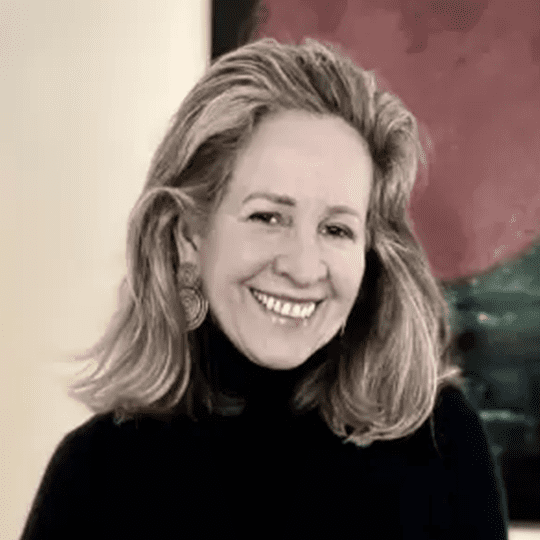
Lorraine Ocampos
Lorraine Ocampos is a former Senior Economist at the International Monetary Fund and former Research Director of the Central Bank of Paraguay. With more than 25 years of international policy experience, her work spans fiscal policy, public financial management, and economic reform across Latin America & Beyond
Glossary of terms used
Term | Definition |
|---|---|
Asset Repatriation | The process of returning stolen or looted funds and properties to the country of origin or the rightful owners. |
Balance of Probabilities | The civil standard of proof used in the IACC Assets Division, which is lower than the criminal standard of “beyond a reasonable doubt.” |
Complementarity | A jurisdictional principle where the international court only acts as a “court of last resort” when national systems are unwilling or unable to prosecute. |
Enablers | Professional intermediaries (banks, lawyers, real estate agents) who facilitate or hide the proceeds of corruption. |
Grand Corruption | Corruption committed at the highest levels of government that distorts policies or the central functioning of the state, often referred to as kleptocracy. |
IACC | The International Anti-Corruption Court, a proposed international tribunal dedicated to prosecuting grand corruption and recovering stolen assets. |
Integrity Initiatives International (III) | The international civil society organization (often referred to as “Triple I”) devoted to the establishment of the IACC. |
Kleptocracy | A government ruled by leaders (kleptocrats) who use their power to loot the wealth of their nation for personal enrichment. |
Legal Persons | Non-human entities, such as corporations or shell companies, that can be held legally liable under the IACC statute. |
Pandora Papers | A massive release of investigative documents (similar to the Panama and Paradise Papers) revealing how world leaders hide their wealth in offshore accounts. |
Proprio Motu | The power of the IACC prosecutor to initiate investigations on their own initiative based on information from any source. |
State Capture | A situation where private interests significantly influence a state’s decision-making processes to their own advantage, often through corruption. |
UNCAC | The United Nations Convention Against Corruption; the only binding universal anti-corruption treaty, adopted in 2003. |
Whistleblower | An individual who exposes corrupt or illicit activities; the sources emphasize that they must be protected by statute and potentially compensated. |